
The run-up to Christmas is supposed to feel joyful… yet for many people with IBS, it feels like stress and overwhelm.
As the calendar fills up, IBS symptoms often do too; And suddenly, everything feels louder, heavier, harder to manage.
Why Holiday Stress triggers IBS Symptoms
1) Your nervous system is already overloaded
IBS is deeply connected to your nervous system. And during the holiday period, your brain is all over the place juggling with all those extra things to do. Especially around Christmas.
At work this can look like end-of-year deadlines, Christmas socialising – and all that traffic!
At home there is the extra pre-Christmas planning, organising, gift and food shopping.
And finally, there’s travelling (or even being the host!) and dealing with straining family dynamics.
It’s a LOT. Your system can easily get triggered.
When you get that feeling that there’s too much to do, your gut will often shift into survival mode, and spiral into a flare.
2) The emotional pressure is invisible – but heavy

Even when things look “fine” on the outside, internally you may feel a little overwhelmed.
Maybe you feel bad about saying no or having to cancel last-minute because your body needs a break.
You may be feeling anxious about plans and holding everything together, worried about having a flare up in the midst of it all.
This emotional load can directly trigger IBS symptoms.
3) Christmas and IBS stress: Your usual routine becomes disrupted during the Holidays
December rarely allows for the routines your body relies on. You are rushing instead of resting, trying to get everything done.
Plus you find yourself eating at different times, being tempted by different foods, consuming more alcohol or caffeine. And not sleeping well either.
Your gut likes consistency—and Christmas is anything but consistent.
4) More stimulation at Christmas means more sensitivity

Lights, bustling crowds, noise, parties, expectations…
When you have IBS, this increased sensory stimulation at Christmas can feel overwhelming
And make your stress threshold lower, which triggers your symptoms faster than usual.
This isn’t your fault. But it can be overwhelming and really hard to handle.
What You Can Do When Everything Feels Like “Too Much“
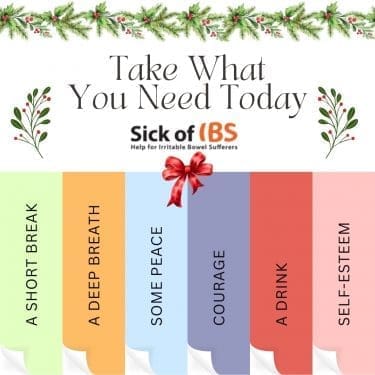
Christmas will probably always feel too much. However, some small, gentle adjustments can make a difference.
Here are some tips that support your body without adding more pressure.
1) Choose at least one daily moment of stillness
Just one small, intentional pause each day when you can:
– sit with a warm drink
– breathe slowly for a minute
– step outside and get some fresh air
– stretch your neck and shoulders.
Use my 3-minute “A few moments of peace” relaxation video to take a short yet deep break.
These micro-pauses calm your nervous system and things somehow feel more doable.
2) Simplify your December commitments
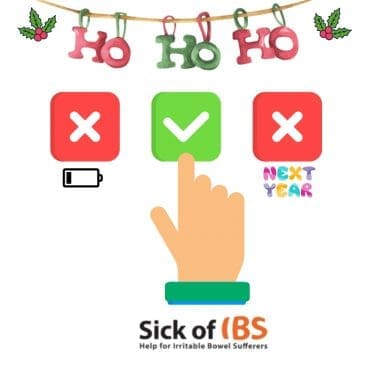
Remember that you don’t have to do “all the things.” You are allowed to say “no”.
Where you can, say no, or “not this year” to optional events, and social obligations you find draining? Or ones you just don’t have capacity for?
Protecting your energy is protecting your health.
And you’ll be in a better state to actually enjoy what you say yes to.
3) Eat predictably—even if the food itself varies
Try to keep meal timing steady as much as you can. You can help support your digestion through routine.
4) Pace yourself and give yourself permission to rest
This is not laziness. It’s essential self-care. Your body is working harder than most people realize.
A lot of people deal with IBS and Christmas stress
If the holidays feel heavier for you because of IBS, you are not alone.
Your gut is sensitive, responsive, and directly tied to your feelings and stress levels—and December asks a lot from your body.
So try giving yourself permission to do things differently this year: Less pressure, more compassion and routines. And more breaks (even short ones). A little less IBS and Christmas stress.
Your body will thank you for it.