

Getting nowhere fast with IBS
When nothing is working for your IBS, it’s so easy to get really worked up – or feel utterly deflated.
The problem with IBS is not just the awful IBS symptoms. It’s that feeling that you’ll never be free of it, no matter what you do.
You start believing what you read on authority websites that say “Currently, there’s no cure for IBS…”
Even though you have heard of people who have done this, you start to doubt, and no longer trust yourself.
If you feel the same, know that you are not alone with this feeling.
There can be something hiding behind this feeling that can keep you stuck: The link between IBS and the Gut-Brain Axis. Read on and see if you relate.
When IBS Diet Changes Are Not Enough
I spent many years tweaking my diet, convinced that what I was eating was causing my IBS flares.

My main focus in life seemed to be on food and symptoms. And yet I seemed to be getting no-where.
I excluded trigger foods – and while that gave me some relief, the symptoms were still coming.
Little did I know that this was only part of the story.
Instead I got that sinking feeling that I would never find the way out of IBS. No matter what I did.
I have put my finger on why. And if you have the same thing going on, you need to know about it.
The frustration and self-doubt IBS loop
I don’t have IBS any more.
However, from time to time situations where I feel worthless are still showing up to haunt me.
They no longer set of any symptoms, because I have done the work to interrupt that cycle.
But sometimes, despite having a Masters degree and various successes to prove the contrary, the child in me is still doubting herself.
Recently the newsletter I carefully carve out and send out with my latest insights kept messing up. Links that I had carefully and manually altered, had code added to them for no apparent reason – and they didn’t work.
Today I have a new “problem” with an image on a new post. I’m getting frustrated and starting to tweak and fight with it.
Just like I used to do with my IBS.
And despite trying to “work out why” and fix it, guess what: No matter what I do, nothing is working.
Despite my best efforts, I’m starting to feel that feeling of utter frustration.
These are among the exact same feelings I would feel most days when I was suffering with IBS.
Notice the deeper gut-brain axis triggers
Fortunately I can spot a pattern.
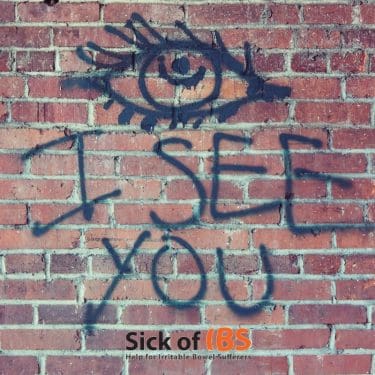
(It comes from experience doing this work.)
By stepping back, and feeling into what was going on, Behind the frustration was actually the feeling of being worthless, and self-doubt.
That part of me that felt alone to find solutions, who learned “You’ll never be anything! You don’t have it in you.” is taunting me.
That inner critic, the “Shaming Shiela” archetype, is telling me to not bother.
That no-one will read what I have to say anyway...
But here’s the thing:
I’ve seen her now:)
I’m letting myself feel another piece of the shame that I had denied for so long. I’m acknowledging her – and letting her go.
Instead of staying stuck, I reached out for help. And the newsletter and my posts are working well.
Start breaking the IBS shame cycle
If you relate, see if you can spot “shaming Shiela” in your life this week.
Does she show up in the people around you? Or as you being critical of yourself? Maybe critical of having IBS -again?
This may help you see part of what is keeping you stuck with your IBS.
Once you see it, you can’t unsee it. The next step is to find the other triggers, and interrupt the cycle.

Alison Adenis | IBS Interrupt™ Coach
Important Note: My work focuses on trigger identification and release based on my personal experience, training, and client work.
This content is for informational and educational purposes only.
I am not a doctor. For diagnosis and clinical treatment, always consult your medical professional.